
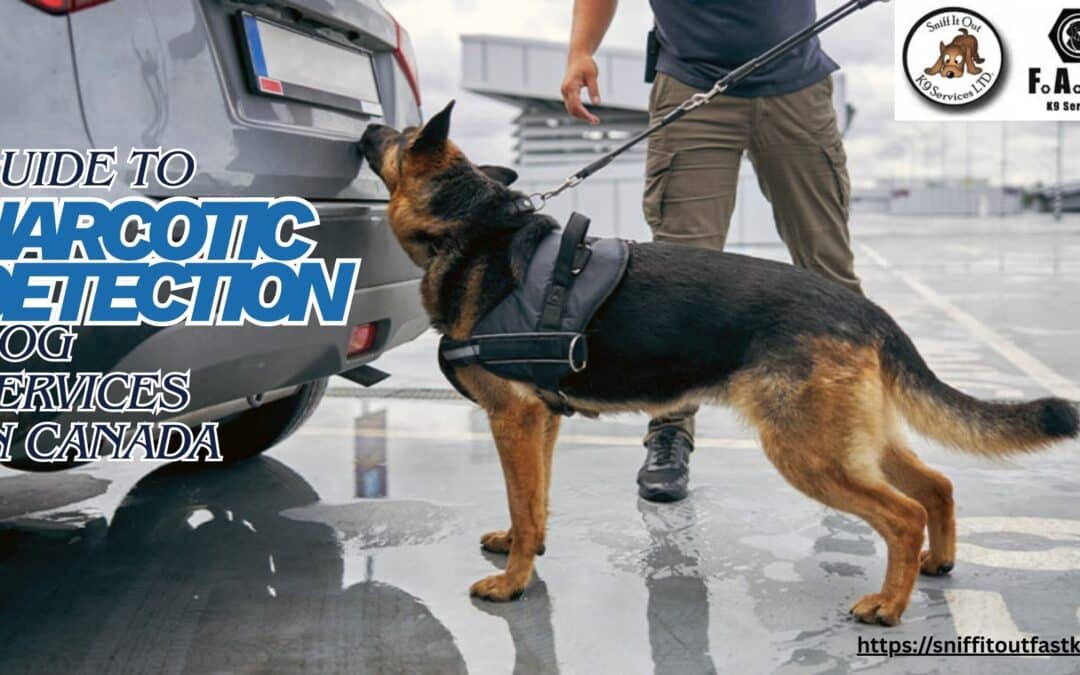
If you’ve never worked with a professional K9 detection team before, knowing what to expect makes the decision easier. This guide covers what these services actually involve, how they’re regulated, and what sets a credible provider apart from the rest.
What Narcotic Detection Dog Services Involve
Narcotic detection dog services are exactly what they sound like: trained dogs and certified handlers who search environments for the presence of controlled substances. But the work is more nuanced than that description suggests.
Professional detection teams are typically hired by employers, property owners, event organizers, schools, or government bodies to conduct systematic searches of facilities, vehicles, or outdoor spaces. The dog is trained to identify specific scent signatures associated with narcotics and gives a clear, trained alert when it detects one.
What distinguishes professional detection from informal efforts is the quality of training, the experience of the handler, and the rigor of the documentation process. In Canada, the credibility of a detection service depends heavily on the handler’s background and whether the dog’s training meets recognized standards.
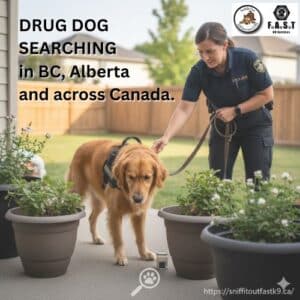
How Dogs Are Trained for Detection Work
Detection dogs go through hundreds of hours of scent training before they are operational. The training is based on operant conditioning: the dog learns to associate a specific odour with a reward, and through repetition, that association becomes reliable and precise.
At Sniff It Out Fast K9, our dogs have either served as RCMP Police Service Dogs or have been trained by handlers with direct law enforcement K9 experience. That background matters because it shapes not just how the dog is trained, but how the handler interprets the dog’s behaviour in the field.
An experienced handler knows the difference between a dog that is genuinely alerting and a dog that is distracted. That distinction is critical when findings need to stand up to scrutiny.
| Our team has been formally recognized by the Alberta Criminal Courts as expert witnesses in narcotic detection — a designation earned through years of operational experience and rigorous documentation standards. |
What a Professional Service Provider Looks Like
Not all detection services operate at the same standard. When evaluating a provider, the following factors matter:
- Handler credentials: Former law enforcement K9 officers or handlers trained to equivalent standards
- Dog training records: Documented training history, regular maintenance training, and scent proficiency assessments
- Operational protocols: Clear procedures for how inspections are conducted, findings are documented, and reports are produced
- Legal defensibility: The ability to produce reports and, if necessary, testimony that holds up in legal or disciplinary proceedings
- Insurance and liability: Appropriate coverage for the environments in which the team operates
A credible provider will be transparent about all of the above and will tailor their approach to fit within the employer’s existing drug and alcohol policy.
Where K9 Detection Services Operate Across Canada
Narcotic detection dog services are used across every province, but demand is particularly strong in western Canada — Alberta, British Columbia, Saskatchewan, and Manitoba — where resource industries create large workforces in remote or semi-remote environments.
Our team operates across BC, Alberta, and throughout Canada. We work in industrial camps, urban office buildings, construction sites, schools, event venues, and First Nations communities. Each environment requires a different approach, and the handler’s experience shapes how effectively they adapt.
What Clients Use These Services For
The reasons organizations hire detection teams vary, but they typically fall into a few categories:
- Proactive workplace safety: Regular sweeps as part of a broader safety program
- Post-incident investigation: Searches triggered by a specific concern or incident
- Policy enforcement: Demonstrating due diligence under a drug and alcohol policy
- Event security: Managing controlled environments at concerts, sporting events, or public gatherings
- Property management: Inspections of rental properties, vehicles, or storage facilities
Frequently Asked Questions
Do I need an existing drug and alcohol policy before hiring a detection service?
In most cases, yes. A written drug and alcohol policy gives the detection program a legal foundation and sets clear expectations for employees. We can advise on what a policy should include and help you identify any gaps before the first inspection takes place.
Are K9 detection services available across Canada or only in Alberta and BC?
We are based in Alberta and BC and serve clients throughout western Canada. We also travel for engagements in other provinces. Contact us to discuss coverage for your specific location.
What happens if the dog doesn’t find anything?
A clear sweep is itself valuable. It documents that, at the time of inspection, no targeted substances were detected in the areas searched. That record can be useful for compliance purposes and demonstrates proactive safety management. We provide written reports for both positive and negative searches.