
Employers are investing in professional K9 drug inspections because they provide a proactive way to identify hidden substance-related risks before those risks contribute to workplace incidents. A trained detection dog can search vehicles, lockers, storage areas, warehouses, and other authorized spaces quickly, with far less disruption than many employers expect.
For a safety manager, the value isn’t simply finding a prohibited substance. It’s knowing that the company is actively looking for hazards that may otherwise remain invisible.
That matters most in workplaces where one moment of poor judgment can have serious consequences.
A forklift moving through a crowded warehouse doesn’t have much room for error. Neither does a crane lifting several tonnes of material or a worker operating machinery with exposed moving parts. In these environments, prevention isn’t a slogan. It’s part of the job.
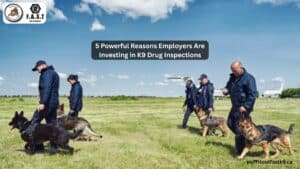
1. K9 Inspections Help Find Risks Before an Accident
The most valuable workplace safety measures are often the ones that never make the news.
A serious incident can develop from a chain of small problems. A substance is brought onto the property. It remains hidden in a vehicle or locker. Someone eventually uses it before or during a shift. Judgment and reaction time may be affected. A mistake happens around equipment.
By the time an accident occurs, management is dealing with the final link in the chain.
A professional K9 inspection addresses the problem much earlier.
The dog isn’t waiting for someone to appear impaired. It is trained to locate specific target odors in authorized areas. That gives employers another opportunity to identify and address a potential risk before it reaches the production floor.
For high-risk operations, that proactive layer can be more valuable than another policy sitting unread in an employee handbook.
2. They Create a Strong Deterrent Without Constant Surveillance
There’s a psychological side to workplace safety that doesn’t get enough attention.
People behave differently when expectations are clear and consistently enforced. If employees know that a company takes substance-related risks seriously and conducts professional inspections, bringing prohibited substances onto the property becomes a much less attractive choice.
That deterrent effect doesn’t require managers to constantly monitor employees.
A scheduled K9 program can establish a simple message: safety standards apply every day, not only after an incident.
This can be particularly useful in large workplaces where managers can’t realistically see everything happening across multiple shifts, parking areas, storage rooms, and remote work zones.
A good deterrent program doesn’t make employees feel watched every minute. It makes the boundaries clear.
3. K9 Searches Can Be Less Disruptive Than Employers Expect
One of the first concerns business owners often have is operational disruption.
Will production stop?
Will employees be pulled away from their work?
Will the inspection turn into a major event?
With an experienced handler and properly trained dog, inspections can often be organized around the normal rhythm of a facility. Depending on the scope and site, a team may search areas such as company vehicles, lockers, parking spaces, warehouses, tool storage, and other authorized locations.
The comparison is useful:
| Approach | Main Advantage | Common Challenge |
| K9 inspection | Fast physical-area screening | Requires trained K9 and handler |
| Individual testing | Can assess an individual | More intrusive and policy-sensitive |
| CCTV monitoring | Continuous visual coverage | Cannot detect concealed substances |
| Employee reporting | Uses internal knowledge | Relies on someone noticing a concern |
| General workplace inspection | Identifies physical hazards | Doesn’t specifically detect drug odors |
K9 inspections aren’t a replacement for these measures. They fill a particular gap.
That distinction is important. The strongest safety programs rarely depend on one tool.
4. They Support a Culture of Fairness
This may be one of the biggest reasons employers continue using professional K9 teams.
Employees don’t want to feel that safety rules are selectively applied.
Imagine a forklift operator being told that substance-related risks are unacceptable while seeing management ignore the same standard elsewhere in the organization. That doesn’t create trust. It creates resentment.
A properly designed inspection program can establish one consistent standard across the workplace.
The dog doesn’t know who is a supervisor, who has been with the company for 15 years, or who just started last week. It works according to its training.
That impartiality can be powerful.
When employees understand that inspections are part of a broader safety policy and aren’t designed to single out particular individuals, the conversation changes from “Who are they looking for?” to “This is part of how we keep the site safe.”
That shift matters.
People are far more likely to support safety programs when they believe the rules are fair.
5. They Give Leaders More Confidence in Their Safety Program
There’s a particular kind of stress that comes with managing a high-risk workplace.
A safety manager may leave work wondering whether something was missed. A plant manager may think about a close call on the drive home. An owner may lie awake after hearing about an incident at another company in the same industry.
Those concerns aren’t always visible, but they’re real.
No inspection program can eliminate every workplace risk. That’s not a realistic promise.
What a professional K9 program can do is reduce one category of uncertainty by adding another method of identifying concealed substances in authorized areas.
That gives leadership something valuable: information.
Instead of assuming the workplace is safe because nobody has reported a problem, management can take proactive steps to verify that the environment meets its established standards.
For leaders responsible for hundreds of employees, that peace of mind can be worth far more than the inspection itself.
Why Local Experience Matters
The way a K9 inspection is carried out should reflect the environment.
A distribution warehouse in Alberta doesn’t operate exactly like a construction site in British Columbia. A manufacturing plant has different challenges from an oilfield facility or transportation yard.
Local experience can make the process more practical.
Businesses considering Drug dog searching Alberta services, for example, may benefit from working with handlers familiar with industrial facilities, shift-based operations, vehicle yards, and the realities of large commercial sites.
The same principle applies to employers looking for professional support in British Columbia. A provider should understand more than dog handling. They should understand workplace professionalism, communication, site safety, and how to conduct searches without turning the process into unnecessary theatre.
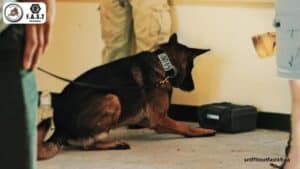
What Employers Should Consider Before Booking an Inspection
Hiring a K9 team shouldn’t be an impulse decision after a workplace incident.
Before starting a program, employers should answer a few practical questions:
What areas need to be searched?
Define the physical scope clearly.
What does the company policy allow?
Make sure the inspection fits the organization’s existing workplace policies and applicable legal requirements.
How will employees be informed?
Clear communication prevents unnecessary fear and speculation.
What happens if the dog alerts?
Establish the response procedure before the first inspection.
How often should searches occur?
The right frequency depends on the workplace risk profile, operational environment, previous concerns, and overall safety strategy.
A K9 inspection is most effective when it’s part of a system rather than a standalone event.
What About Employee Privacy?
This is an area employers should take seriously.
Professional detection dogs are generally used to search authorized physical spaces rather than conduct invasive searches of employees. However, the exact scope and procedure should be established with appropriate legal and workplace guidance.
Businesses should have clear policies covering consent, privacy, employee communication, search areas, documentation, and follow-up procedures.
The objective is to improve safety without creating unnecessary conflict.
That balance is achievable when the program is designed properly from the beginning.
Frequently Asked Questions
Are K9 drug inspections only for high-risk industries?
No. They can be considered by warehouses, manufacturers, transportation companies, construction businesses, offices, and other organizations where substance-related risks are relevant. The approach should match the actual workplace.
How often should employers schedule K9 inspections?
There is no universal number. Some businesses may choose periodic inspections, while others may use less predictable scheduling. Risk level, facility size, workforce patterns, and company policy should guide the decision.
Does a dog alert automatically mean an employee has violated company policy?
No. A trained alert indicates that the dog detected a target odor. The employer should follow its established procedures and applicable legal requirements before taking further action.
Can K9 searches happen while the business is operating?
Often, yes. Experienced teams can plan searches around shift changes, breaks, vehicle movements, or other operational windows to minimize disruption.
Are K9 inspections a replacement for drug testing?
Not necessarily. K9 inspections and individual testing serve different purposes. Employers should determine how each tool fits into their broader workplace safety and substance policy.
Conclusion
There will always be risks that businesses can’t completely eliminate.
The goal of good safety management isn’t perfection. It’s reducing preventable risks before they have a chance to become serious.
Professional K9 inspections give employers another practical tool for doing exactly that. They can help identify hidden hazards, reinforce clear expectations, support fairness, and give leadership greater confidence that its safety program is being actively maintained.
For organizations exploring services such as Narcotic detection canine Alberta programs or professional detection support in British Columbia, the right provider should offer more than a trained dog. Look for experienced handlers, clear procedures, discretion, reliable communication, and an approach that respects the people being protected.
Because ultimately, workplace safety isn’t about catching someone.
It’s about making sure the person working beside you can finish their shift safely, walk out the front gate, and get home to the people waiting for them.
If your organization is ready to strengthen its existing safety program, speak with a professional K9 detection provider about your facility and risk profile. A confidential consultation can help you determine whether regular inspections are appropriate and how they can be introduced without disrupting your operation.
Prevention is easier when you start before you need it.